

Homoeopathy was founded by German Physician named (Dr.) C.F.S. Hahnemann in the year 1790. When he was translating Cullens Materia Medica from English to German.
When he came across that the drug which was best agent to cure malaria in the sick had produced the very same symptoms of malaria in the healthy body. After his experiment with the Cinchona Bark in 1789 he conducted similar experiment on himself , his family & friends during period of 6 years.
He recorded the symptoms. This symptoms thus produced & co- related them with the symptoms of the disease they were being prescribed for. In 1796 (Dr.) Hahnemann published his findings in a article entitled-essay on the new principle for ascertaining the curative power of drugs where in he explained his theory of Similia , Similibus Curantur
He died on 2 july 1843.
Prof. (Dr.) Shailendra Singh is having an experience of 38+ years of teaching in
the Homoeopathic Colleges and Clinical Practices in the field of Homoeopathy. Has been Principal Investigator
, Researcher and Nodal officer of research work on Type-2 Diabetes Mellitus and Hypothyroidism, Migraine
and Skin Diseases Conducted in the Govt. National Homoeopathic Medical College Lucknow.
Organize 16th All India
Homoeopathic Conference at Lucknow in 2008 by The Homoeopathic Medical Association of India.
Qualification B.SC B.H.M.S. GOVT. HOMOEOPATHIC MEDICAL COLLEGE KANPUR
M.D.- M.P.K. HOMOEOPATHIC MEDICAL COLLEGE JAIPUR
Guide and Examiner of Postgraduate Students of Homoeopathy
Expert Member of Public Service Commission of many states in India.
Has been Member of Drug Proving Committee of Homoeopathic Drug Research Institute Lucknow , Govt of India.
Life Member - The Homoeopathic Medical Association of India.
President - HMAI Lucknow Unit.
Life Member - Indian Institute of Homoeopathy , New Delhi.
Member - Scientific Advisory Committee (CRI,Lucknow) .
EX. MEDICAL OFFICER INCHARGE- STATE HOMOEOPATHIC DISPENCERY U.P.
EX. PROFESSOR AND HEAD PRACTICE OF MEDICINE - GOVT.NATIONAL HOMOEOPATHIC MEDICAL COLLEGE LUCKNOW
The Clinic is located in Sector- 5 , Gomti Nagar Extention , Lucknow UP. The Homoeopathic Neuro clinic was founded by Prof. (Dr.) Shaliendra Singh , M.D. (Hom.). Ex. Professor & Head Govt. National Homoeopathic Medical College Lucknow in the year 1995 in Ashiyana area of lucknow later shifted to Gomti Nagar Extension.
(Dr.) Singh has a vast experience of more than 38+ years in the filed of Homoeopathic and treated hundred & thousand of patients suffering from Neurological Problem , Skin Diseases , Gynecological Problems , Gastro Problem .
Joint & Bone disease , Kidney & Respiratory Problems , Blood Pressure , Diabetes , & the Heart Diseases etc. In the OPD of the Homoeopathic College & in the Clinic.
(Dr.) Singh also organized many seminars & given lectures on various topics in the conferences + seminars all over the India .
MYTH - Homeopathy with Allopathic medicine - it is justified ?
FACTS - There is no rationale of stopping allopathic drugs Homeopathic medicine can be given concurrently. Since Homeopathic potencies act on dynamic plane. where as Allopathic drugs acts on physio – chemical level.
MYTH - That while taking Homeopathic medicine one such as - raw onions , garlic , coffee , spices , tea , alcohol , or smoking.
FACTS - However since all homeopathic medicine are absorbed from the Tongue & Buccal Mucosa which is also gently supplied with the nerve endings. It is advised to patients that they refrain from eating or drinking anything for 15 minutes before & after the homeopathic medicines. Also it is wiser to rinse one's mouth if one has eaten anything strong smelling as garlic , onion etc. excess of coffee & alcohol , tobacco , are restricted especially in patients who are restless because it acts like stimulant.
M.D. Jaipur, LMHMAI, LMIIHP (Delhi)
Ex.Prof.& Head of Medicine N.H.M.C, Lucknow
Ex. Examiner Various Universities in India
Ex. Member of Health & F.W. Govt. of India.
Reg. No. H-21344
Consultation Fee- 500/-
Online Consultation Fee- 500/-
Arthritis is a disease that affects your joints (areas where your bones meet and move). Arthritis usually involves inflammation or degeneration (breakdown) of your joints.
Ankylosing spondylitis is a type of arthritis that causes inflammation in the joints and ligaments of the spine.
The two main types of thyroid disease are hypothyroidism and hyperthyroidism. Both conditions can be caused by other diseases that impact the way the thyroid gland works.
Migraine is a type of headache characterized by recurrent attacks of moderate to severe throbbing and pulsating pain on one side of the head.
Diabetes is a chronic disease that occurs either when the pancreas does not produce enough insulin or when the body cannot effectively use the insulin it produces.
a brain disorder that slowly destroys memory and thinking skills and, eventually, the ability to carry out the simplest tasks.
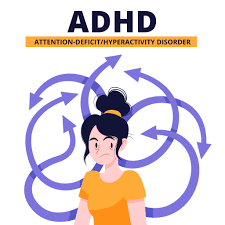
People with ADHD may have trouble paying attention, controlling impulsive behaviors (may act without thinking about what the result will be), or be overly active.
A chronic urinary tract infection is a repeated or prolonged bacterial infection of the bladder or urethra, the tube that carries urine from the bladder out of the body.
What is infertility? In general, infertility is defined as not being able to get pregnant (conceive) after one year (or longer) of unprotected sex.
A tumor is an abnormal growth of body tissue. Tumors can be cancerous (malignant) or noncancerous (benign)
Vitiligo is a chronic (long-lasting) autoimmune disorder that causes patches of skin to lose pigment or color.
Constipation is a condition in which a person has uncomfortable or infrequent bowel movements.
Overview. Overweight and obesity are defined as abnormal or excessive fat accumulation that presents a risk to health.
occur when your immune system reacts to a foreign substance — such as pollen, bee venom or pet dander — or a food that doesn't cause a reaction in most people.
Rheumatic disease is an umbrella term that refers to arthritis and several other conditions that affect the joints, tendons, muscle, ligaments, bones, and muscles
Acne is a common skin condition that happens when hair follicles under the skin become clogged.
Warts are noncancerous (benign) rough bumps that form on the skin. They develop when the human Papillomavirus, or HPV, enters a cut or break in the skin and causes an infection.
Corns are thick round skin lesions typically appearing on the toes. Repetitive rubbing or pressure (e.g., shoe) is the leading cause of corns. Corns have a hardened central core, whereas calluses do not. Certain deformities, such as hammertoes, can cause corns as the crocked toes rub on the shoes.
Kidney stones (also called renal calculi, Nephrolithiasis or urolithiasis) are hard deposits made of minerals and salts that form inside your kidneys.
If gallstones lodge in a bile duct and cause a blockage, it eventually results in severe life-threatening complications such as bile duct inflammation and infection,
Muscular dystrophy is a group of diseases that cause progressive weakness and loss of muscle mass.
By age 10, children will usually grow by 2.5 in, or 6.3 cm, every year. During adolescence, which lasts from roughly age 11 to age 21, teenagers will reach the final 15–20% of their adult height. After this, the growth plates stop making new bone, and a person will stop growing.
the presence of too many eosinophils in the body. An eosinophil is part of a group of cells called white blood cells. They are measured as part of a blood test called a complete blood count. This is also called a CBC.
Hepatitis is a general term used to describe inflammation of the liver.
Liver problems that can occur include fatty liver disease and cirrhosis. The liver and its cells
the presence of kidney damage or an estimated glomerular filtration rate (eGFR) less than 60 ml/min/1.73 mt2, persisting for 3 months or more, irrespective of the cause.
Your blood pressure is considered high when you have consistent systolic readings of 130 mm Hg or higher or diastolic readings of 80 mm Hg or higher.
Haemorrhoids, also known as piles, are swellings containing enlarged blood vessels that are found inside or around the bottom (the rectum and anus).
Chronic pancreatitis is a progressive inflammatory disease of the pancreas that affects both functions of the pancreas.
Eczema is a condition that causes your skin to become dry, itchy and bumpy.
Psoriasis is a skin disease that causes a rash with itchy, scaly patches, most commonly on the knees, elbows, trunk and scalp.
A peptic ulcer is a sore on the lining of your stomach, small intestine or esophagus.
a long-lasting disorder in which a person experiences uncontrollable and recurring thoughts (obsessions), engages in repetitive behaviors (compulsions), or both.
PCOD (Polycystic Ovarian Disease) is a medical condition in which the woman ovaries produce immature or partially mature eggs in large numbers and over the time these become cysts in ovaries.
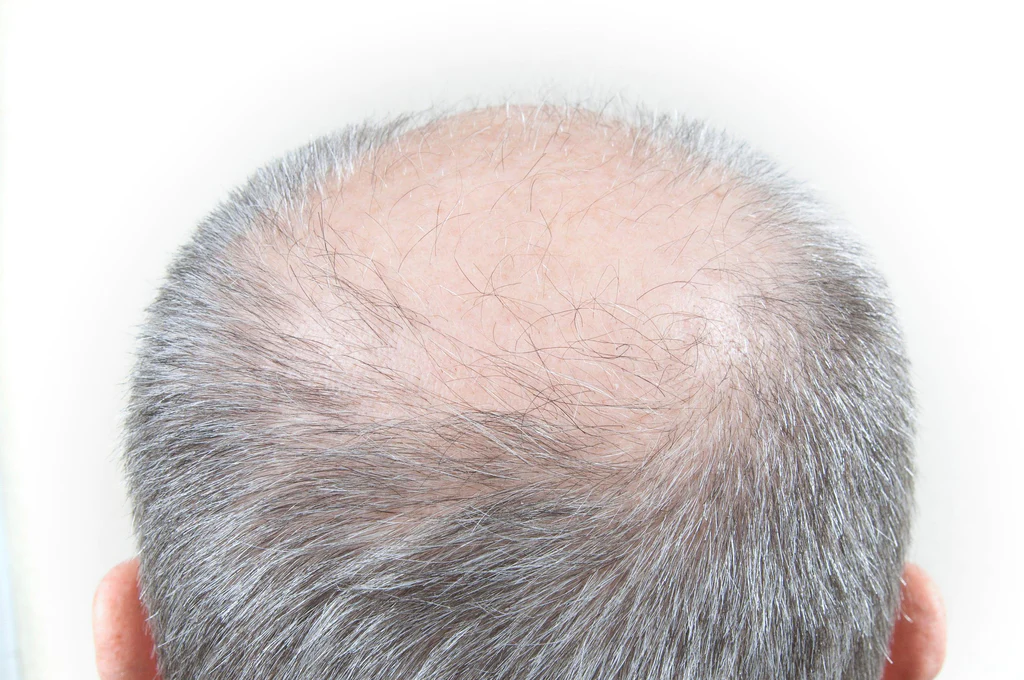
It can be the result of heredity, hormonal changes, medical conditions or a normal part of aging.
Colitis is inflammation in your colon, which is the main part of your large intestine. Your colon is the last leg of the journey your food takes through your digestive system. Inflammation in your colon can affect the way this journey ends, causing pain,
exercise, relaxation and positioning, painkillers or local anesthetics, and manual and physical therapy.
Cholesterol is a waxy, fat-like substance that's found in all the cells in your body.
Autism spectrum disorder (ASD) is a developmental disability caused by differences in the brain.

Feel free to get in touch with us.
Copyright © 2023 - All Rights Reserved - H.N.C.
Designed by Creative Digital World